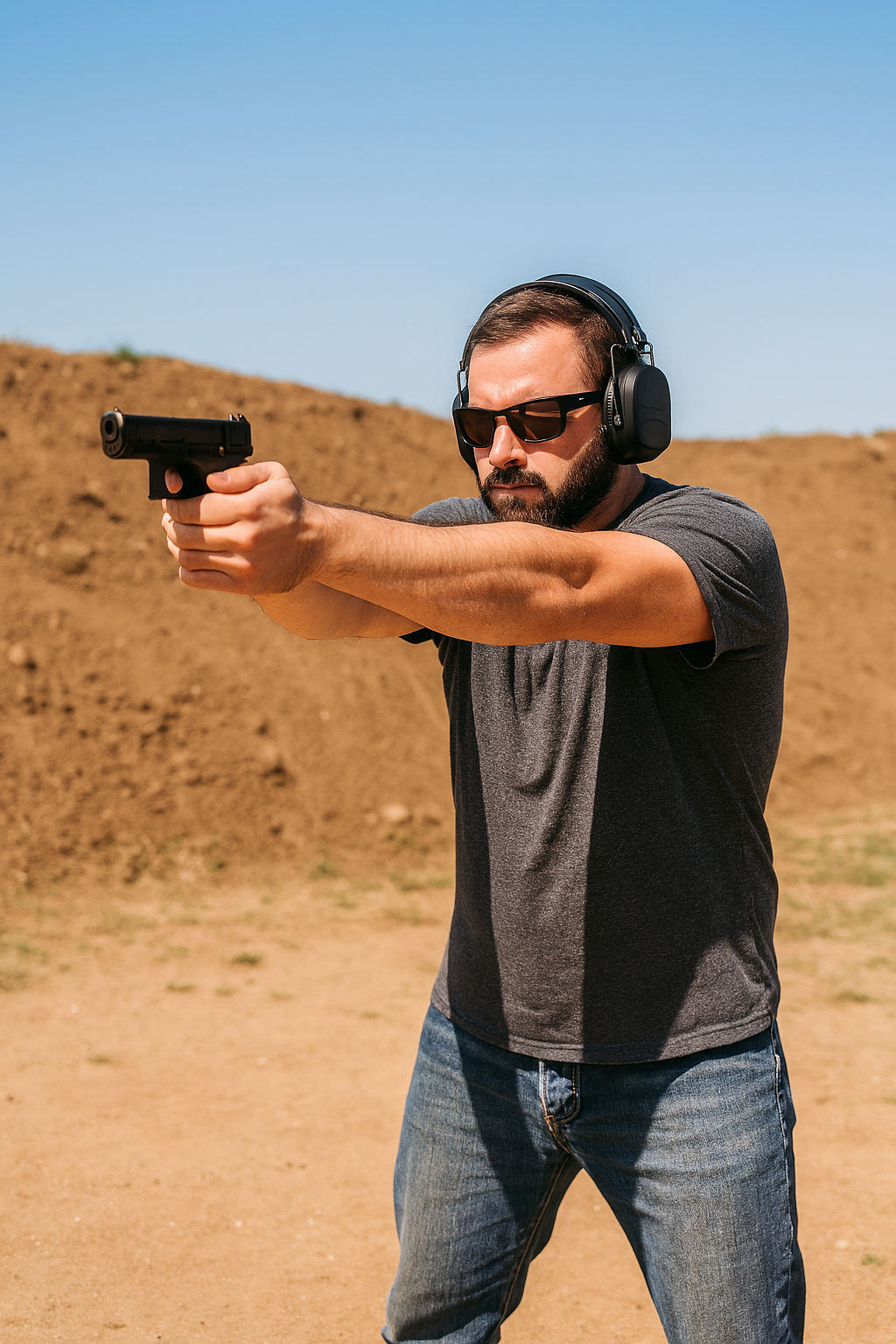
Let’s discuss types of pistol shooting stance for perfect Even with perfect sight alignment and trigger control, poor stance can introduce instability that throws your shots off.
Are you standing consistently with good posture and a stable stance?
Are your arms locked in a way that helps manage recoil?
Whether you’re a competitive shooter, a tactical enthusiast, or just starting out, understanding the different types of shooting stances can dramatically improve your performance. In this post, we break down the most common pistol stances, their advantages, and when to use them.
Stance Types:
There are different types of stance in pistol shooting
1. Isosceles Stance (most common and intuitive):
How to do it:
- Feet shoulder-width apart
- Arms extended equally in front, forming an isosceles triangle with your body.
- Both elbows locked or nearly locked.
- Body squared toward the target.
- Very common in modern defensive and sport shooting.
Pros:
- Easy to learn
- Naturally aligns sights
- Balanced recoil control
- Good for fast transitions
Recommended for:
- Biginners
- Defensive shooting
- Range work
- Competitive shooting (IPSC, USPSA, IDPA)
2. Modified Isosceles (Modern Tactical Stance)
How to do it:
- Similar to Isosceles, but with the strong-side foot slightly back (around 4–6 inches)
- Adds more weight to the balls of your feet for recoil control
- Promotes better mobility and balance
- Arms still extended forward
Pros:
- Better recoil management
- Allows quicker movement
- Stable platform for rapid fire
Recommended For:
- Competitive shooting
- Tactical drills
- Intermediate shooters
- Law enforcement, military, and serious defensive shooters
3. Weaver Stance (More Traditional, Less Common Now)
Recommended For:
- Some older-school or traditional shooters
- Defensive shooting
- Shooters who prefer a bladed body angle
How to do it:
- Strong foot back
- Support arm bent downward, strong arm more straight
- Shoulders slightly rotated — body is not square to the target
- Creates isometric tension between arms
Pros:
- Can help control recoil (if trained properly)
- Feels more natural to some people with prior martial arts experience
In Conclusion:
Choosing the right pistol stance depends on your goals, body mechanics, and shooting environment. Read more clue here. Try each stance during dry fire and live practice to see which feels most natural and effective. Remember—consistency is key. Once you find your stance, stick with it and refine your technique over time.